RSS

A Publisher’s Dilema – iPad, Kindle, or eBook – Which format should we publish in for our NLP and Hypnotherapy Practitioners

One of the wonderful things about the evolution of social media (Twitter, Facebook, Blogs etc) is that you get instant and regular feedback – and so it happened with NLP practitioners feeding back on our books.

We have many NLP, hypnotherapy and coaching books and one of the regular pieces of feedback, in particular from the USA is that they would love to have the book in an electronic format. Practitioners never know when they are going to encounter for example a client with a child with learning difficulties [Seeing Spells Achieving], or suffering from bedwetting [Stop Bedwetting in 7 Days], or indeed a client with a relative suffering from cancer [You Too Can Do Health + Bangers and Mash] etc. OK – shouldn’t be too hard? Or is it?

Herein is the challenge. Most users of electronic devices will be blissfully unaware that there are already a host of different formats that you have to consider – and each one has different processes and different costs associated with them.

NLP practitioners can stop reading here [the rest is a book industry rant, albeit you may find it fun]- what we’d love to know from you is which format you prefer – please vote here – iPad vs Kindle].

Going electronic – iPad, Kindle and ePub.

Lets start with ePub. This is the standard [oh what a lovely misleading word that is] that the book industry has gone with – check out wikipedia for the deeper definition. Not too bad an attempt, but be wary that many companies that produce ePub versions don’t produce a clean enough version, so there is already dilution of the standard happening. Lets assume you get a great company create you a good ePub file – you need another ISBN for it. OK, I get that you have to differentiate from the printed version, so now you are set and ready to go? Well, not really. The world’s biggest seller of books, Amazon uses a different format. Ah.

Onto the mighty Kindle then. My entrepreneur’s hat is doffed to the boys and girls at Amazon for Kindle as to be honest, it sometimes takes someone flooding the market with a new device to spur the rest to play catchup and they are pretty heavy on promoting it – just visit their US homepage and it screams ‘Kindle now only $189‘. To supply Kindle you need the mobipocket format – OK, fair enough, allocate another IBSN, get the mobipocket files created.

And finally, drum roll please for…………….. the uber-sexy iPad. Yes, it is Apple’s latest wonderful device the iPad. Don’t listen to the techno-geeks that throw bricks at the functionality of the iPad, it’s a lifestyle/behaviour changing device and it the sales are phenomenal already. The great news for us as publishers is that Apple have chosen to run with the industry standard ePub format. What? I hear you exclaim, no new format that you have to use that is specific to Apple? Wonderful I’ll get going right now. Well, actually no. You can’t supply ePub as it is to Apple, you have to convert it into a file format that they will accept. Before you reach for your wallet, the good news is that Apple provides you with the free software that you need to convert your ePub files. I will at this point refer you back to the earlier paragraph, it has to be a proper ePub file, not one of the really cheap “I’ll give you a volume price sir” ePub files some are knocking out to unsuspecting publishers. Hoorary then – go, go Apple. Ah, slight problem. iTunes Producer, the software that converts only runs on Macs.

Five years ago we decided that we were good at publishing, and design agencies are good at design, so we outsourced all our design including our book covers [thanks Bob] and as a consequence we only run PCs not Macs. Brilliant. So we have lots of lovely ePub files and now have to find a low/zero cost way to convert them. By the way Apple have taken a lesson from their eBook predecessors and set up a series of aggregators that will gladly take that hassle away from you in return for either a) a fee, or b) ouch, ouch, ouch 30-60% of your margin.

So that’s the story so far. I haven’t even added in the dilema with iPad between supplying iBooks verus Apps as that would really upset you.  We, the independent publishers, are trying to embrace this new electronic world but boy are they making it tough. So any insight you can give us as to which to do first – please vote  iPad vs Kindle.

If you’d like more of the history of how we go to this little ‘challenge’ check out the eBook page on Wikipedia.
 
Leave a comment

Posted by on July 17, 2010 in Publishing


Necrotizing Fasciitis (necrotising) sufferer pens amazing book to inspire others facing critical trauma

Wendy Harrington is an author, mentor, speaker and mother of 3. Since a near death experience, she has been exploring mental, physical, emotional and spiritual aspects to create a more peaceful, fulfilling and easy life.

Wendy has worked with experts around the globe on spiritual awakening, mindset, Tai Chi, Chi Kung, Meditation, Photo-reading, Constellation work, Shiatsu and Psychology. In the process she found levels of peace and contentment that she had never experienced before and now works with others to help them breakthrough their limitations and experience increased peace, joy and harmony in their lives.

Wendy’s warm, open, honest and down to earth approach has helped her connect with thousands of people wanting to break through hidden obstacles and experience greater joy, success and harmony in life.

Process and Prosper’ is a book based on her personal experience of battling to recover from necrotizing fasciitis following the birth of her third child.

It’s a story of courage, of struggle against her own fears and limitations, and the discovery of the emotional freedom available when we connect with our physical intelligence (the wisdom held in our physical bodies).

There is an international foundation called the NNFF that has more information on the disease.


Tags: , ,

Garden Composting Can Be A Safe, Responsible and Worthwhile Form of Recycling

Whenever a new form of recycling is heralded as a contribution to the life of the planet and a reduction in the carbon footprint, there spring up a host of ‘nay-sayers’ that highlight the problems with it. None more so than garden composting or recycling. It’s been described as ‘a dangerous folly of the middle classes’ and some other even less kinder descriptions that focus on the dangers of not doing it correctly, when in reality it can be a very productive and useful tool for the avid gardener. Leading agro-scientist Bill Butterworth explains the ‘why’ of composting:

“There is something about “waste” and gardening which is what an academic would call “beautiful”. One of the ways of solving any problem is to find an exact opposite and put the two together; both problems disappear. Many will have heard, on television or the radio, of a “black hole” which can occur in outer space. For those who know a little of what a “black hole” in space is, and indeed those who don’t, the analogy of a black hole and a supernova is an example of this way of problem solving. Get the right size of black hole and the right size of supernova and put them together and there is nothing; the mass of the black hole and mass of the supernova cancel each other out. The down-to-earth gardening problem of what to do with untidy “wastes” and how to make things grow has a similarity; the wastes from the house and the garden itself is one problem and the need to produce flowers and vegetables which need nutrients to make them grow is the other. Put these two problems together in the right way and the problems not only disappear, they produce a benefit.”

All of that seems a pretty good idea, and it is. However, there is a downside with both trivial and potentially serious consequences.

Trivial first. Recycling is hard work. It is messy and often looks it.  It occupies space. It is much easier and tidier to just throw everything in the bin and then go and get a bag of mineral fertiliser from the garden centre. Alternatively, go and get some horse manure, or farmyard manure, or compost from a big local centralised site: they are all organic and, at least in some way, good alternatives.

Potentially serious consequences? There are some really dangerous bugs from a human health point of view – both fungi and bacteria. Key thing to remembers are that a compost heap is not a place for kids to play and everyone should wash thoroughly after tending a compost heap.

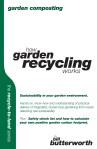
There are nine key parts of the safety checklist for Garden composting and here are the first four from Bill Butterworth’s book – Garden Composting – How REcycling Works:

  1. Educate the children in a balanced way.  Tell them how this is a small contribution to a better environment, because it is. Without scaring them or other people, tell them that there maybe some fairly nasty “bugs” in a compost heap and that these can cause bad tummy ache and diarrhoea, maybe worse.
  2. Show them the garden thermometer and show it in use.  They need to know about pasteurisation. (Just as in milk.)
  3. Always use gloves when handling compost.
  4. Even if you have used gloves, wash hands afterwards and especially before eating.  Never put dirty hands near the mouth.

The book goes on to explain how garden recycling actually works and is an ideal read for those that want to understand how it all works. The book also includes a guide on calculating your own carbon footprint.

Garden Composting

Garden Composting

Bill’s first degree was taken at Reading University in agricultural science back in the early 1960’s.  He was a lecturer for 13 years in

Essex at Writtle College, where more than half the students were horticultural and was, for 21 years, a Moderator at the School of Horticulture at the Royal Botanic Gardens, Kew.

 
Leave a comment

Posted by on July 4, 2010 in Recycling


Tags: , , , ,

Throat Cancer Patient’s Biography Brings Insight To Leading Cancer Consultants

Bangers and Mash is the biography of Keith Hern’s battle with throat cancer and like most biographies written by cancer survivors, is intended mainly to offer support and information to other patients. It has also brought significant insight to the medical team involved in the author’s treatment.

Consultant Head & Neck Surgeon Peter Williamson (Keith’s Consultant at St. Anthony’s Hospital) summed it up as

“a fascinating insight into the patient’s perspective on coping with treatment for head & neck cancer”

while Kevin Harrington (Keith’s consultant at The Royal Marsden Hospital) observed that

“I can tell people the facts and describe the treatment, but I can’t tell them how it feels.”

The book, a fast-moving and totally honest account of a journey through cancer treatment in both pictures and words (author Keith Hern is a professional photographer) is a shining example of its genre, as the rapidly growing collection of glowing reviews on Amazon testify.

Peter Williamson continues:

“anything that adds to my comprehension of how my patients understand and respond to the treatment is always helpful – the more we understand each other, the better we can work together to manage the disease and treatment pathway.”

With the whole area of patient-medic communication being somewhat of a ‘hot topic’, Bangers & Mash is very useful in helping to close the gap between the clinical perception of consultations given and what the patient actually hears.


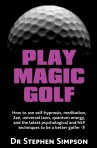
How to use self-hypnosis, meditation, Zen, universal laws, quantum energy, and the latest psychological and NLP techniques to be a better golfer

Play Magic Golf

Play Magic Golf - The Book

Dr Stephen Simpson is an executive golf coach. He also happens to be an NLP master practitioner and a hypnosis expert. He has spent a good many years learning from NLP experts like Paul McKenna and Richard Bandler and started to share his expertise in audio books and mp3 downloads and reached the No.1 spot for the mp3 download on iTunes for ‘Play Magic Golf’.

Now Stephen has taken all the expertise and put it into a handy book for golfers in what is certain to be the top of the christmas card list for all golfers around the world.

It was only released a few days ago and its already entered the Top 100 for NLP.

It’s published on the 1st September and available for pre-order from Book Depository with free delivery worldwide – click here.


Tags: , , , , , ,

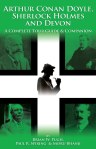
Arthur Conan Doyle, Sherlock Holmes and Devon, A Complete Tour Guide – A New Book of Key Sites that Inspired Sherlock Holmes

Arthur Conan Doyle, Sherlock Holmes and Devon

Arthur Conan Doyle, Sherlock Holmes and Devon

The time that Arthur Conan Doyle spent in Devon was critical. It was only when he wrote ‘The Hound of The Baskervilles’ did Sherlock Holmes become a worldwide phenomenon. It was there, on Dartmoor that Conan Doyle got the inspiration for what was to become the most famous, and most important, crime fiction mystery of all time. Two leading Holmes historians Paul R. Spiring and Brian W. Pugh have teamed up with a Devonian historian Sandru Bhanji to create the definitive guide to Sherlock Holmes and Devon. Arthur Conan Doyle, Sherlock Holmes and Devon: A Complete Tour Guide & Companion (MX Publishing,15th June) contains detailed descriptions, background and even GPS co-ordinates for thirty key Sherlock Holmes and Arthur Conan Doyle sites across Devon.

Key towns featured include Plymouth, Yelverton, Buckfastleigh, Ashburton, Newton Abbot, Ippleton, Paignton, Torquay, Exeter, and Lynton.

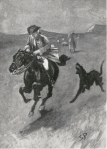
The Hound Of The Baskervilles - Image from the Strand Magazine

In November 1887, Beeton’s Christmas Annual published a story entitled A Study in Scarlet that was written by a twenty-eight year old Southsea-based physician called Arthur Conan Doyle. It was the first of sixty stories that he wrote over forty years that each feature the now iconic literary detective, Mr Sherlock Holmes. This character has since appeared in around two-hundred and thirty films making him probably the most filmed fictional character of all time.

The definitive tour guide for anyone looking to retrace the steps, physically or virtually, of Arthur Conan Doyle during his time in Devon and see the places that inspired the Sherlock Holmes stories.

The long-lasting appeal of Sherlock Holmes is due first and foremost to the story writing skills of Arthur Conan Doyle. However, there is little doubt that had it not been for three residents of Devon, the history of crime fiction might have been very different indeed. Firstly, George Turnavine Budd engineered the circumstances that prompted Conan Doyle to relocate to Southsea and spend more time at his writing-desk. Secondly, George Newnes delivered the Sherlock Holmes tales to a broad readership via the pages of the British and American editions of The Strand Magazine. Thirdly, Bertram Fletcher Robinson was pivotal to the inception of The Hound of the Baskervilles, which first appeared some eight years after Conan Doyle had ‘slain’ Holmes ‘for good and all’ in only his twenty-sixth adventure.

In fact, Arthur Conan Doyle wrote in a British edition of The Hound –

“MY DEAR ROBINSON, It was to your account of a West-Country legend that this tale owes its inception. For this and for your help in the details all thanks. Yours most truly,
A. CONAN DOYLE, HINDHEAD, HASLEMERE.”

Bill Barnes, Chairman of the Sherlock Holmes group The Sydney Passengers comments:

“If George Newnes had not founded the immensely popular Strand Magazine at the time that Conan Doyle wrote his first two Sherlock Holmes short stories and then commissioned many more after their success then perhaps the Holmes adventures would have taken a lot longer to reach such a wide readership, if at all.

If Bertram Fletcher Robinson and Conan Doyle had not become such firm friends on the ship home from South Africa and thereafter Fletcher Robinson had fired up Conan Doyle’s imagination with legendary tales of huge phantom dogs and the wilds of Dartmoor then maybe The Hound of the Baskervilles might not have been written, or have been written very differently.

Sir George Newnes c1905

This book contains a wealth of information – hard facts and interesting trivia – and displays considerable research and talent upon the part of the authors to present it so as to appeal to people across a broad spectrum. Anybody with the slightest interest in the history of Devon, the writings of Arthur Conan Doyle, the Sherlock Holmes phenomenon or the early days of popular publishing in Victorian and Edwardian times (the ‘New Journalism’) will find this book a highly interesting read and an indispensable reference. The expansive and comprehensive touring notes will take you to many interesting points and having this book in the car or backpack as you explore Devon will be like having the three authors along with you as knowledgeable tour guides.”

Arthur Conan Doyle, Sherlock Holmes and Devon: A Complete Tour Guide and Companion is released on 15th June 2010 and will be a fun read for both the traditional Sherlock Holmes enthusiast and the new breed fuelled by the recent Guy Richie reincarnation in the Hollywood movie Sherlock Holmes starring Jude Law and Robert Downey Junior. Guy Ritchie’s Sherlock Holmes has won many awards already including the best action film at the 2010 National Movie Awards , a Golden Globe, IFTA and Empire awards. Through the book fans can see the original places that inspired in particular the ground breaking ‘The Hound Of The Baskervilles’.

About The Authors
Brian W. Pugh is the Curator of The Arthur Conan Doyle (Crowborough) Establishment where he maintains the modest collection of Arthur Conan Doyle ephemera that is held by that organisation and their official website The Conan Doyle Crowborough Establishment. He is the sole author of A Chronology of the Life of Sir Arthur Conan Doyle and also the joint author of On the Trail of Arthur Conan Doyle and Bertram Fletcher Robinson. Brian is a member of numerous Holmesian groups including The Sherlock Holmes Society of London. He lives at Lewes and is a retired former British Gas Engineering Supervisor.

Paul R. Spiring is a Chartered Biologist and Physicist. He is currently seconded by the British Government to work as the Head of Biology at the European School of Karlsruhe in Germany. Paul is also the joint author of On the Trail of Arthur Conan Doyle and Bertram Fletcher Robinson and has compiled a further four related books. He also maintains a tribute website that commemorates the memory of Bertram Fletcher Robinson BFR Onilne and is a member of the Devonshire Association and a number of Holmesian groups.

Sadru Bhanji is Vice-Chairman of the Devon and Exeter Institution and also Treasurer of the Exeter Branch of the Devonshire Association and past Treasurer of the Devon History Society. He is the author of Barbary Pirates Off the Devon Coast and Postcards from Topsham. Sadru has produced over thirty papers on Devon’s local history for various journals including The Lancet, Transactions of the Devonshire Association, The Devon Historian and Devon and Cornwall Notes and Queries. He lives at Topsham near Exeter and is a retired Consultant Psychiatrist and University Lecturer.


Tags: , , , , , , , , , , ,

Waterstones Croydon Book Signing Event on Sir Arthur Conan Doyle’s Birthday 22nd May

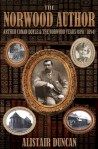
To celebrate Sir Arthur Conan Doyle’s birthday on the 22nd May, one of the world’s most renown Sherlock Holmes historians Alistair Duncan appeared at Waterstones Croydon from 11am to sign copies of all three of his books – but in particular his latest book  ‘The Norwood Author’ which is very much a local book for the store. Fans were treated to a rare bookstore appearance from Duncan who lives in South London

Conan Doyle wrote many of his Sherlock Holmes stories while he was a resident in Norwood and many commentators feel that some of his best work came during those four years. He had just taken the decision to give up the medical profession and take writing more seriously.

The Norwood Author

The Norwood Author

Conan Doyle is one of the most written about men who ever lived but despite this some parts of his life get little attention. One such period is between 1891 and 1894 when he lived in South Norwood in present day south-east London. During this period he wrote and published much of his best work including the first two series of Sherlock Holmes short stories. The book ‘The Norwood Author‘ looks at his life during this period and, in contrast to other biographies, spends time looking at some of his input into local Norwood life.

The timing was nice as the Sherlock Holmes DVD was released on the Monday so the Waterstones store was full of Holmes merchandise.


Tags: , , ,

Lady Mystery Writer Brings a Female Sherlock Holmes To Life

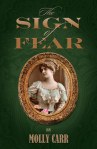
Hats off to Molly Carr whose debut novel ‘The Sign Of Fear‘ is a wonderful book that charts the adventures of Mrs.Watson, the wife of Dr.Watson and her sidekick Emily Fanshaw. With a supporting cast of Sherlock Holmes, Dr.Watson and Moriarty it is a great story and a fresh female approach to the Holmes canon.

The number of female crime writers is rising with the increasing popularity of Tess Gerritsen, Elizabeth George, Karen Rose, Lynda La Plante, Janet Enavnovich, and Kathy Reichs among others. However, one genre within mystery fiction has remained largely male dominated – that of Sherlock Holmes.

One look at the top 100 books for Sherlock Holmes will have you struggling to find any female authors, let alone the share that mainstream crime fiction now has – and that’s a real shame. As soon as you get into ‘The Sign Of Fear’ you can see and feel the female perspective and it’s fascinating to experience Victorian England from a woman’s point of view.

Molly’s main character is Mrs.Watson and the old phrase ‘behind every great man there is a great woman’ is very true here as she cuts straight to the chase as a formidable leading lady in her own right.

A great detective needs a sidekick and Mrs.Watson is no exception. Emily Fanshaw does however spend a good part of the book disguised as a man – a necessity born out of the time. Some of the most intersting and amusing action takes place in France giving Molly a chance to throw out some lovely sterotypes from her English characters.

The Sign Of Fear

The story is told through the first person of Mrs.Watson is a delightful Victorian manner and use of language is excellent and refreshingly traditional – the use of words like ‘retort’ and ‘exude’ bring a smile to your face . There is much of the ‘Jeeves and Wooster’ style here and I am sure Molly won’t mind being compared to PG Wodehouse.

The Sign of Fear is relased across the world on 15th June 2010 and will be a fun read for both the traditional Sherlock Holmes enthusiast and the new breed fuelled by the recent Guy Richie reincarnation.


Tags: , , , , ,

Neuro-Linguistic Programming (NLP) Executive Coaching To Beat Cancer

Bangers and Mash is a life story with a difference: this book recounts how professional photographer and alternative therapy sceptic Keith Hern used a topical executive coaching strategy (NLP) to fight throat cancer and win.

Neuro-Linguistic Programming (NLP) is most commonly used to help executives overcome their perceived limitations to reach career goals. NLP Gurus include Paul McKenna, Michael Neill, Richard Bandler and Art Giser. MostBangers and Mash is a life story with a difference: this book recounts how professional photographer and alternative therapy sceptic Keith Hern used a topical executive coaching strategy (NLP) to fight throat cancer and win. businesspeople use the techniques to improve their confidence and sales skills but Keith used its methods for the battle of his life, with results that have impressed and amazed the medical establishment.

Bangers and Mash charts that battle – with great candour and humour Keith tells it like it is. Being a photographer he also shows it like it is, persuading medical staff and friends to take pictures at every stage of his treatment.

The result is a gripping story, not always comfortable, but always honest. Written: “to help anyone else faced with the doom-laden words ‘you have cancer’ to know what it’s like” the book also raises some thought-provoking questions about traditional treatment routes.

Meeting his NLP coach in an entirely unrelated context and prior to his cancer diagnosis, Keith turned up for his first session “an emotional wreck, frightened to death and simply not knowing how to deal with the treatment process.” He left with an altogether more positive outlook having taken the first steps on the road to changing his beliefs to ‘I can beat this’.

Keith credits the regular Neuro-Linguistic Programming sessions with helping to keep positive and give him the energy to fight his cancer. Read the book – it’s inspiring, thought-provoking and ultimately uplifting.

Reviews from businesswomen in particular have been glowing. Internationally successful chef Nigella Lawson comments “I admire Keith Herns spirit and his honesty“.

Businesspeople facing major challenges can take a lot from Keith’s story as he shows how NLP helped him gain focus and drive him towards his goal of surviving the cancer. If Keith could use NLP to take on cancer then there it proves there is a lot there for entrepreneurs to use to tackle the challenges that they face in business.

The link between NLP and energy has been around for some time with the phrase ‘Energetic NLP’ being used by many practitioners.

As a photographer by trade Keith charts the battle with some fascinating images with special permissions granted by The Royal Marsden Hospital. Funds from the book go towards the hospitals great work with cancer patients.

The book is available from all good bookstores and Keith’s website. Booksellers The Book Depository are offering free delivery worldwide on the book. In addition to positive reviews from trade reviewers, people with family members battling cancer have charted how helpful the book has been:

“A brilliant read for anyone who has been diagnosed or caring for someone with cancer as it is inspirational and gives a comprehensive detailed account of life as a cancer patient and how you can win.”


Tags: , , , , ,

Publishing Data Revolution Transforms the Humble Book Into a Powerful Marketing and Social Media Sales Tool

In the last two years something rather special thing has happened in the publishing industry. No, I’m not talking about the rise of the internet, or even the arrival of the eBook, it’s something in the background that has revolutionised the distribution of content. It means that businesses that want to get their name, brand and value proposition in front of millions can do so for the cost of a newspaper advert.

The best way to explain is to talk through an example. Imagine you are a specialist hypnotherapist with a practice that consults with children and adults. You have developed a very successful new way to cure bedwetting in children, and you want to generate as many bookings into your practice as possible. So you write a book that explains the methodology.

The book is published by a modern publisher that is connected into digital printing and they load your details into the major book databases. Within a few days, your book and your brand appears on literally tens of thousands of websites around the world including huge names like Amazon, Tesco, Waterstones, Barnes and Noble and more. This is because there has been a revolution in the distribution systems of content and within an instant the metadata and images are sent around the world – only a few years ago and the data would have gone out quarterly on a CD. See Stop Bedwetting in 7 Days.

The concept of a book as a marketing tool is not too new, but few realise that the revolution in book data distribution has turned it into a very powerful one. Coupled with digital printing bringing print runs from the thousands down to the tens, you have a very viable new marketing tool.

There are some very important elements here.

1. Title Keywords: You will see that the titles of the books are quite long. This is to ensure that they are carrying the necessary keywords that people are searching for. In addition to on-site searches in the bookstores, the search engines are also scouring the web for these keywords and many ecommerce website these days include the titles in the URLs – so for example – http://search.barnesandnoble.com/Stop-Bedwetting-In-7-Days-A-Simple-Step-By-Step-Guide-To-Help-Children-Conquer-Bedwetting-Problems-In-Just-A-Few-Days/Alicia-Eaton/e/9781904312703/

2. You are presenting yourselves through your expertise. This is a subtle indirect sell for your organisation/brand. In the same way you promote yourselves using social media by providing interesting and expert content (Tweets, Blog Entries, Articles etc) publishing a book on your area of expertise is a way for people to see your expertise in a tangible form before contacting you.

3. Public perception of publishing is still one of reverence – despite the fact that commercial publishing has made it easier than ever to get a book on your subject area published, the general opinion of published authors is high “She must be an expert, she has had a book published on it”. For those of you worried that means anyone can do this don’t panic – the reality is that you still do need a very good product as a book because if the content is poor it will get bad reviews and put people off, but the beauty of the low entry cost is that more niche and specialist subjects can be covered.

I know many of you will be wondering if this is only applicable to professional practitioners but it really can be applied in most industries. In the marketing field an excellent example is The Hotel Success Handbook. A collaboration between two leading consultants – one in marketing and one in hospitality – that have put together their collective methods to help small hotels do their marketing. They launched in March and already have sold lots of books around the world but critically have the book on their stand at trade shows. Instant credibility especially with industry experts giving them quotes and endorsements. They have already had bookings for the consultancy as a result of the book. A book makes the expertise tangible – you can pick it up and dive in, it can give potential customers a lot of confidence. That neatly brings us on to an additional key point:

4. As with all good marketing tools the book is going to be successful if it is part of an overall marketing plan, and the ‘call to action’ is there for the customer to take. As most book distribution is by the web, customers and leads will be largely web based. Take a look at the Stop Bedwetting and Hotel Success Handbook websites for examples of how the authors are professionally capturing that traffic.

Let’s take another example. Imagine you are a sports club with a fantastic history and a website with loads of amazing content and pictures. You want to share that history with as many fans as you can but also you want to generate some income for your club. So you go to the digital publisher and once again the book is available worldwide. The description refers to your club website so visitor numbers grow significantly. You are working with a modern publisher so in addition to royalties on the book, you can also sell copies yourselves in the club shop. In fact, you recoup your publishing costs on the day of the launch of the book at the club lunch before the game (see For College, Club & Country – A History of Clifton Rugby Football Club).

So for a modest budget (a few hundred dollars), and some time organising your content, you can create and extremely powerful, mass exposure, tangible marketing tool. Combined with Social Media its strength becomes quite amazing – oh and we didn’t even cover yet how eBook versions take it to yet another level as you can include interactive content and hyperlinks in those…..

 
Leave a comment

Posted by on April 25, 2010 in Publishing


Tags: , , , ,