RSS

Interview with Kate Workman, author of Rendezvous at the Populaire where Sherlock Holmes tackles the Phantom of the Opera

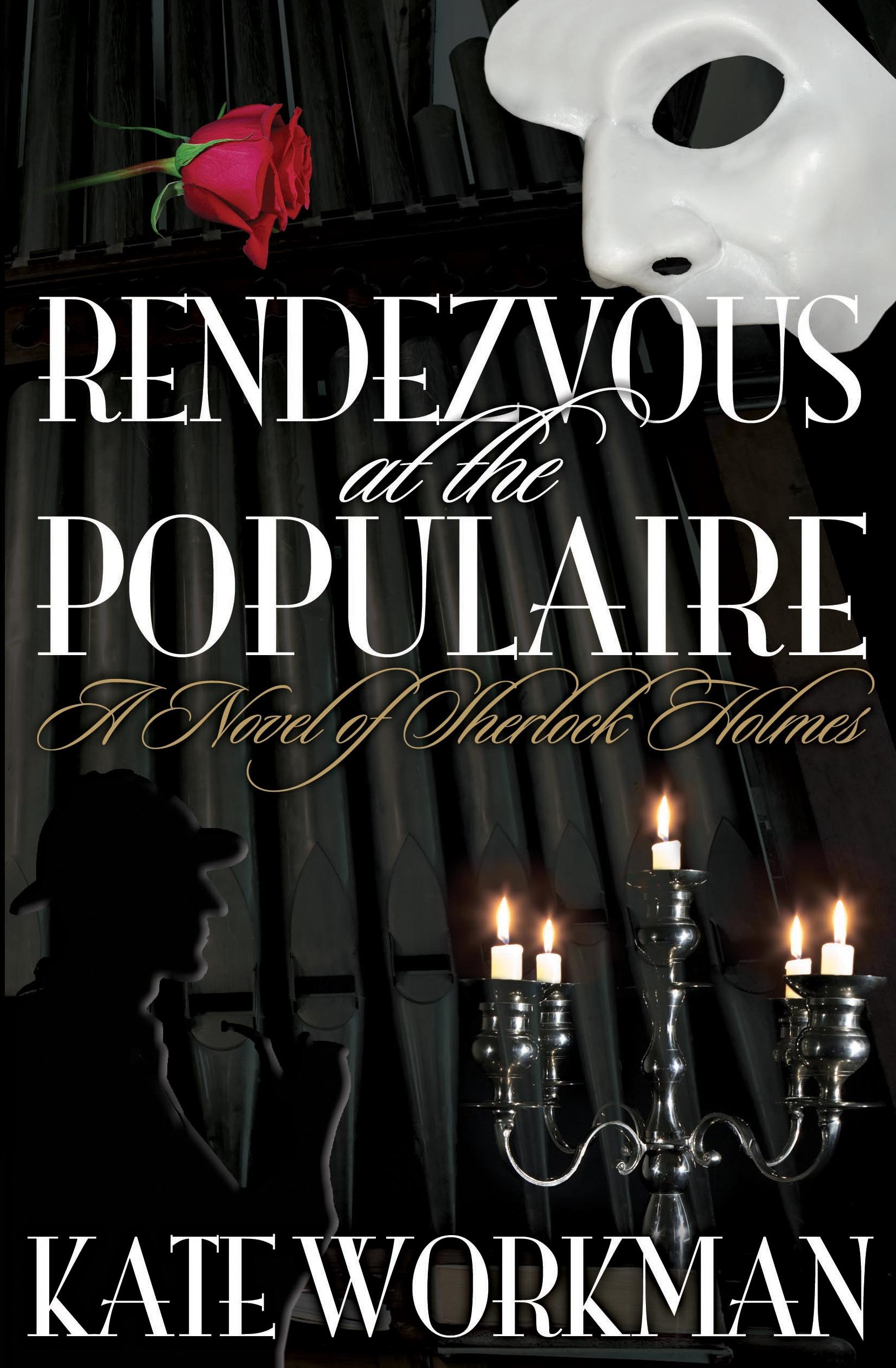
Rendezvous at the PopulaireWe caught up with Kate Workman from New Jersey ahead of the May launch of her debut novel ‘Rendezvous at the Populaire’ in which a badly injured Sherlock Holmes is coaxed out of retirement to tackle the Phantom of the Opera. Kate explains that pitting two literary giants against each other was too tempting to resist.

What was the main inspiration for the book?

My main inspiration for Rendezvous at the Populaire was simply that I love the idea of Holmes and the Phantom not only matching wits, but potentially joining forces.  They are both giants in the literary world and any novel that features them both has the making of one incredible novel.

Which is your favourite aspect of the book?

My favorite aspect of my novel was being able to get into Holmes’s and the Phantom’s heads.  As Watson writes in the last segment, “The only thing I knew for sure was that Holmes and Erik understood one another. They were both remarkably similar men, outcasts of, yet so well-known within, their worlds.” Being able to write either about, or from the perspective of, these characters was an incredible, and incredibly challenging, experience.

Of all the Holmes stories which is your favourite and why?

Of Sir Arthur Conan Doyle, I’d have to say The Final Problem and Hound of the Baskervilles. Of other authors, I think The Shadow of Reichenbach Falls by John R. King is my favorite.

When did you first become interested in Sherlock Holmes?

I was about ten and my dad showed me the movie Young Sherlock Holmes.  I was hooked, but it was years later before I started reading Holmes stories and bought the Canon.

If you could meet Arthur Conan Doyle on his forthcoming birthday, what would you ask him?

I just finished reading The Sherlockian, by Graham Moore, which focuses on a period in Sir Arthur Conan Doyle’s life, so I would probably ask Conan Doyle how much in there is true.  If Sherlock Holmes did become an absolutely hated character who overshadowed everything else Conan Doyle wrote and felt was of more merit than Holmes.

What are you reading at the moment?

I’m reading the first in a trilogy by Lisa Scottoline called Mistaken Identity.

What’s the best aspect of being a Holmes author?

Let’s be honest.  Everyone who writes a novel using a character already in creation is basically writing fan fiction.  At least, that’s how I look at it.  And within that, the best part of writing this is the challenge of keeping the character ‘in character,’ while putting him in a situation that we think up.

How do you view the new adaptation of Holmes in the BBC’s Sherlock?

The BBC’s Sherlock is absolutely amazing.  I love it, I think they did an incredible job modernizing Holmes, and I can’t wait till more episodes come out, because they left off on the worst (or possibly best) cliffhanger I’ve ever seen.

Which other modern day Holmes writer do you most enjoy?

John R. King, Laurie R. King, Sam Siciliano, and Edward B. Hanna.

Rendezvous at the Populaire is available from all good bookstores including Amazon, Amazon Kindle, Kobo and iBooks (iPad and iPhone).


Tags: , , , ,

Interview with Gerard Kelly, Author of The Outstanding Mysteries of Sherlock Holmes

Outstanding Mysteries of Sherlock HolmesGerry Kelly’s collection of 13 (a Baker’s Street dozen as he calls it) Sherlock Holmes mysteries first came to light in a limited edition hardback volume a few years ago and garnered a lot of praise from Holmes societies around the world. The collection is back in new updated edition being published worldwide and we caught up with Gerry to ask him abou the collection’s second outing.

What was your main inspiration for the book?

When I was a young man I was, (and still am) a huge fan of Sherlock Holmes and Doctor Watson. All too soon, however, I had read the complete collection and wanted more! So I tried reading some of the pastiche Holmes stories that were out there at that time. I’m afraid I was bitterly disappointed. Almost all of them had the authentic style and dialogue of the originals, but were woefully weak on the plots. I thought to myself, ‘I could write better stories myself, than some of these pastiches’, so there was my inspiration. In modern times the choice is much better and the bar has been raised by authors like Tony Reynold (Lost Stories of Sherlock Holmes).

What is your favourite aspect of the book?

I like the fact that although each story can be read on its own, there are links between them and the first story is definitely linked to the last.

What is your favourite story from the collection?

I would have to say that possibly The Chamber of Sorrow Mystery because I found it so moving, that I actually wept during the writing of it.

What book are you reading at the moment?

THE 4% UNIVERSE, Dark Matter, Dark Energy, and the Race to Discover the Rest of Reality. By Richard Panek. As you may tell from this choice, my other passion, apart from Sherlock Holmes, is science. My heroes are Sir Isaac Newton, Charles Darwin, Albert Einstein, Richard Feynman, Carl Sagan, Richard Dawkins, Steven Hawking etc. I love cosmology, palaeontology, geology and those related subjects.

What is the best part of being a Holmes pastiche writer?

The fact that the characters already exist and are all household names. Everyone knows them and therefore my task of characterisation is almost totally eliminated.

The most famous pastiches of the current generation are the BBC’s Sherlock and the movies from Guy Richie – what do you think of them?

I enjoyed the BBC’s Sherlock and thought it a novel twist to set it in the present day. However, I am still a traditionalist and prefer the original settings. I’m afraid I haven’t seen the Guy Richie film yet.

Illustrations were an important part of the original stories in The Strand – is that what encouraged you to add in some throughout your collection?

Yes indeed. The Strand Magazine illustrations, by Sidney Paget, were the inspiration for my own humble attempts to replicate that same format. I hoped that the drawings would add an extra dimension to the narrative. They certainly did in the originals.

Do I have any plans for more stories?

Just a couple, but no where near enough for a full book at this stage. I am still hoping for inspiration.

Which of Conan Doyle’s characters is your favourite?

My favourite character, apart from Sherlock himself and Dr. Watson, would probably be the American, Jonas T Rimmer. As well as being a protege of the Napoleon of Crime, Rimmer is a cunning psychopath, very nearly as clever as Moriarty, and is Holmes’ ultimate nemesis in the book. All the world loves a lover, but many people are drawn to an arch villain too, and that includes me.

What question would I ask Conan Doyle if I were to meet him?

How on earth did he manage to come up with so many plots for his stories? I struggled to find thirteen. I would also like to say to him that I hope he would not be offended by being copied by pastiche-writers like me, and that he would be of the opinion that imitation is the most sincere form of flattery!

What else are you working on at the moment?

I would dearly love to see one of my Sherlock Holmes stories acted out on the stage, and so to this end I re-wrote one of the mysteries, The Mayfair Strangler in the format of a stage play. No easy feat, as other writers out there will testify if they have tried the switch from author to playwright! The result, I thought, was pretty good, so I sent it to Neville Roby, Theatre Manager at the Garrick Playhouse in Altrincham, near to where I live. He was not as enthusiastic as I was, but offered me some hope by saying, …With some more work on the script it may merit a further look in due course and we invite you to submit it again for consideration at a later date. Please let us know if it is presented at some other theatre and we will make every effort to come and see it in order to get a better idea of its suitability for this theatre. Not the worst rejection I’ve ever had…… Suitably encouraged I wrote again to Neville suggesting another story from my book called The Chamber of Sorrow Mystery. This time, however, I didn’t go to the trouble of actually writing the stage play, I just sent him the story, with the promise that, if successful, I would then write the stage script. At this moment in time the story is being considered by the Play Selection and Casting Committee, at the Garrick. Wish me luck!

The Outstanding Mysteries of Sherlock Holmes is available through all leading bookstores worldwide including Amazon, via Amazon Kindle, Kobo Books, and iBooks (iPad and iPhone) and various other formats. If you’d like to stage one of the stories as a play you can get in touch with Gerry through us here.


Tags: , , ,

The very different styles of Sherlock Holmes Pastiches

There are many different types of Holmes pastiche and its an area that’s growing fast for us as a publisher. The most common is what many refer to as a ‘traditional pastiche’. Telling new stories, in the style of Conan Doyle, with the same characters, in the same time period. When you read a good traditional pastiche, you can imagine that it could have come from the pen of Conan Doyle. Within this genre, there are short story collections, like The Lost Stories of Sherlock Holmes (Tony Reynolds), and The Outstanding Mysteries of Sherlock Holmes (Gerard Kelly) that follow the The British Museummini-story format. Adding to the authenticity both of these include drawings similar to those that appeared alongside the Holmes stories when published in The Strand.

In the traditional style you also have novels. We’re delighted to have our first example in Rendezvous at The Populaire which is a fascinating encounter pitting Holmes against The Phantom of The Opera. We have great hopes for this series as there are already four more mapped out.

Both Guy Richie’s Sherlock Holmes and the BBC’s Sherlock are not traditional pastiches, but for very different reasons. Richie keeps to Victorian London, but strays away from the original in a number of areas, not least in the interests of heart stopping action. Though the originals had plenty of action, they weren’t littered with explosions and chases. The BBC have stayed much closer to the original characters, but changed the setting to the modern day. The genius of having Holmes issue simultaneous ‘Wrong’ texts to the assembled press at the Lestrade press conference makes me smile every time I think of it.

It has been very interesting to hear the views of the ‘traditionalists’ when it comes to the above two new interpretations. By and large there is wholesale support for the BBC and clamour for more episodes. Richie in my humble opinion was in a no-win situation as far as the traditionalists were concerned. Nobody would ever be able to compare to Jeremy Brett and Basil Rathbone’s images of Holmes, yet a reconstruction that was very traditional would probably have bombed at the box office, so I think he’s got the mix about right.

A whole new generation of fans are enjoying Holmes on the big screen. Take one look at the Sherlock Holmes group on Facebook for the movie with its 1.4 million fans and you can see that the age range spans across all generations.

The next group of pastiches is still set in the original setting of Victorian London, but takes either new characters and weaves them into the original stories, or takes an aspect of the originals and expands on that particular element. Both these areas can be done both seriously and/or with humour.

The latter is very evident in the series of stories from Molly Carr. Molly takes the character of Mrs.Watson and makes her the central heroine. She adds a side kick in her friend Emily Fanshaw. Molly’s novel follow similar storylines, in the Victorian timeframe with Watson and Fanshaw having their own adventures. Their first outing The Sign Of Fear had the traditionalists up in arms that you could have a ‘Female Sherlock Holmes’ but even those that set out to be annoyed were won over by the humor in the writing which was further exhibited in the second book, A Study In Crimson. Molly stretches the boundaries by pulling in characters from other novels as well. Emily finds herself (many times) dressing as a man to ensure they can progress in several situations where the Victorian era dictates ‘only men can tread’.

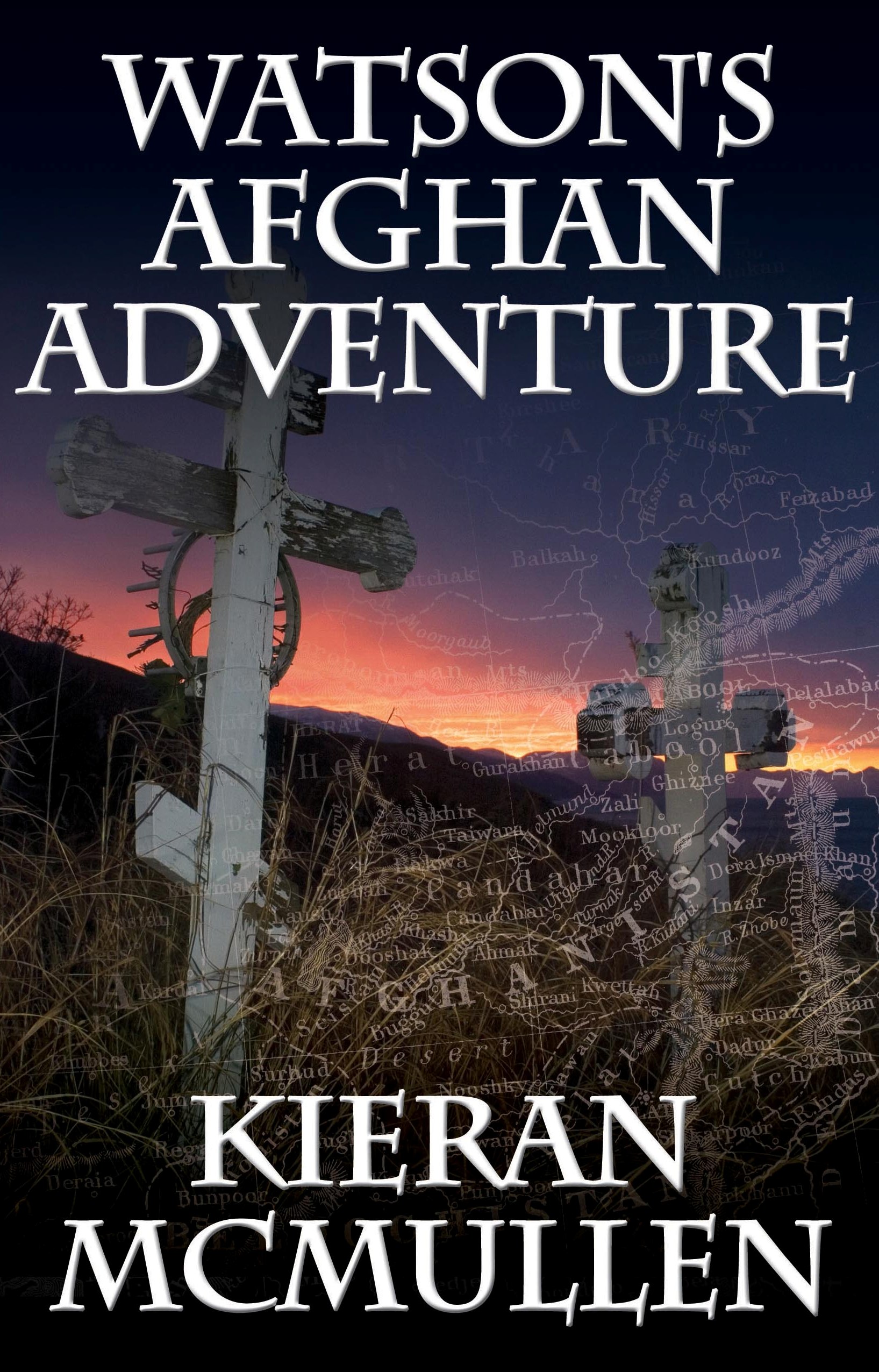
More traditional and rather more serious are those focussing on the life of Dr.Watson whose character Watsons Afghan Adventure on Amazon Kindleplayed second fiddle to Holmes and where Conan Doyle left many questions unanswered – great gaps for a pastiche writer to exploit. Take Kieran McMullen. An ex-military man himself (following the old adage about writing about what you know) Kieran decides to answer the many questions about Watson’s military career by writing an entire pastiche novel around it. Watson’s Afghan Adventure as the name suggests covers Watson’s time as a military doctor in Afghanistan. There are several sub-adventures involved in true Conan Doyle style, but the book has a lot of military detail and has been well received by Holmes fans – and extremely well by Watsonians. One look at Amazon USA shows the glowing reviews for the military authenticity. Keiran’s blog has several articles supplementing that detail.

Such biographies of the key characters are popular. Molly Carr took a break from her Mrs.Watson series to deliver what some regard as her seminal work – In Search of Dr Watson – a very detailed biography. Molly has a distinction in Watsonian studies and it shines through.

It is very interesting to note that pastiches appear to be very popular on Amazon Kindle. Perhaps because ebooks have been more popular for fiction rather than historical books, and also perhaps because the original stories are available for free on Kindle and other eBook formats.

The final group of pastiches is the one most removed from the original. The ‘fantasy’ or ‘fantastical’ pastiche takes elements of Holmes, in the case of Shadowfall the main characters, and puts them in situations that Shadowfallare quite a long way from Conan Doyle’s style, location and storylines. In Shadowfall within the first few pages we are introduced to rather nasty fairies (not pretty little things at the bottom of your garden these) and we go on an increasingly dark journey where Holmes is battling to save the soul of Watson.

It is the very detached pastiches that many Holmes historians struggle with but ironically seem the most popular with the fans. Shadowfall has topped the MX charts since its launch in March 2011, closely followed by The Lost Stories of Sherlock Holmes. It will be very interesting to see which has the more enduring following and in which formats.

The full list of MX pastiches (in order of worldwide sales):

  1. Shadowfall
  2. The Lost Stories of Sherlock Holmes
  3. Watson’s Afghan Adventure
  4. In Search of Dr.Watson
  5. A Study In Crimson
  6. The Sign of Fear
  7. The Outstanding Mysteries of Sherlock Holmes (pre-order)
  8. Rendezvous at The Populaire (pre-order)

We also should mention, linked to pastiches are those novels/thrillers that are linked to Holmes through their storylines. Murder In The Library by Felicia Carparelli is one of those. A the book centres around a character who is a big Holmes fan and (without spoiling the plot) the solving of the case requires all their Sherlockian knowledge.

You can engage with all our authors at the Sherlock Holmes Books Facebook Group and find all our books on our websites. We now have sites for UK-Europe, USA, Canada, India, and Hungary.


Tags: ,

Interview with Kieran McMullen, author of Watson’s Afghan Adventure, a Sherlock Holmes Novel

Watson's Afghan AdventureNew York city born Kieran McMullen is a veteran of both the Korean DMZ and Desert Storm, which gives you a clue as to the level of military detail there is in his debut Holmes novel – Watson’s Afghan Adventure. This attention to detail has drawn admirers from across the Sherlockian fan base around the world.

His blog is one of the most popular on Watson on the web – with his recent series entitled ‘The Many Watsons’ has elicited many positive comments. We found Kieran busy preparing for another military re-enactment for an interview.

What was the main inspiration for the book?

Having been a career soldier, a student of military history and a lifelong Holmes fan, I often wondered what Watson’s experience had been in the service. I and many of my friends had a good handle on many of Queen Victoria’s “little wars” but the 2d Afghan was not one of them. So why not learn about the war and see what would have been an experience that helped form Watson’s later life and character?

Which is your favourite character/aspect of the book?

Of course, my favorite character is Watson, himself. But what really fascinates me are the parallels to what we are caught in today. There seems to be no change in local tribal attitudes from the time of Watson’s war to the issues my son deals with as a soldier in Afghanistan today. It’s dealing with the tribal issues that helps Watson see what is important in life.

Of all the Holmes stories which is your favourite and why?

Can there be any question that it has to be The Hound of the Baskervilles? It exemplifies both the intellect of Holmes and the intelligence and can-do attitude of Watson. It’s unfortunate that to date it has (even after 28 tries) never really been adequately moved to film.

When did you first become interested in Sherlock Holmes?

My father taught English and Russian literature at St. John’s University in New York. When I was about 8 years old he handed me a book of the canon and “suggested” that I read it over the summer. I was hooked from then on. I couldn’t get enough of the great detective or the good doctor. I must say that I identified more with Watson. I knew I wasn’t the smart guy in the crowd, but if I worked hard I could at least be of assistance to others.

If you could meet Arthur Conan Doyle on his forthcoming birthday, what would you ask him?

Actually, I would like to discuss things that have nothing to do with Holmes. I would like to ask him about his relationship with Sir Roger Casement and what exactly changed his mind from being opposed to Home Rule for Ireland to being in favor of it. This is especially curious considering his attitude during the Boer Wars.

What are you reading at the moment?

At the moment I’m reading “The Irish Rebellion of 1916” by Joy. I’ve always been interested in Irish history and especially the era from the Rising of ’98 through the Civil War. The entire period impacted US and Canadian history to an extent that few people appreciate.

What’s the best aspect of being a Holmes author?

I would have to say that the best aspect is that Holmes is a subject that everyone is familiar with. You can talk about Holmes and Watson and people know exactly who the characters are so there is immediate association. I have to admit that I have been dumbfounded by the number of people who have asked me if Holmes and Watson were real.

How do you view the new adaptations of Holmes – the BBC’s Sherlock and the Guy Richie directed movies?

I have to say that I really like the new BBC series. They have really updated the characters without losing the essence. A really wonder job! I also think the new Sherlock Holmes with Robert Downey and Jude Law is wonderful. They really nail Watson as the intelligent man of action. Holmes may be a bit too seedy but it’s so well played overall you can overlook that.

Which other modern day Holmes writer do you most enjoy?

Let’s see, there are only about a thousand to choose from, aren’t there? Of course you can’t go wrong with David Stuart Davies, Michael Hardwick or Frank Thomas.

You can follow Kieran on his blog, Dr Watson, Sherlock Holmes and Watson’s Time In Afghanistan.

Watson’s Afghan Adventure is available from bookstores worldwide including Amazon, Amazon Kindle, Kobo Books, iBooks (iPad) and various other formats.


Tags: , , ,

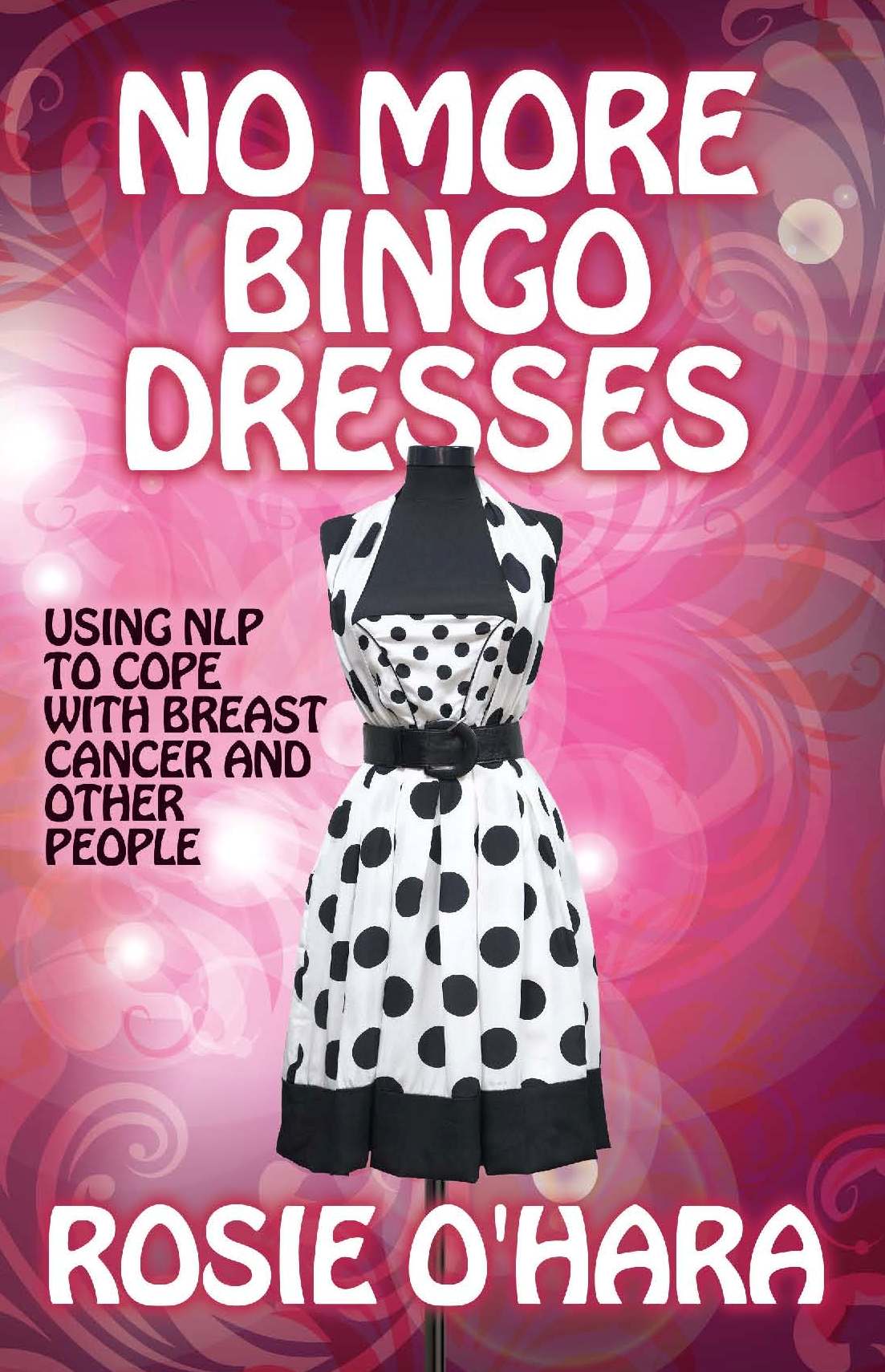
Interview with Rosie OHara, author of No More Bingo Dresses, Using NLP to cope with Breast Cancer and Other People

No More Bingo DressesFollowing the phenomenal reaction around the world to Keith Hern’s book on throat cancer and NLP (Bangers and Mash), including his appearance on ITV’s This Morning as an advocate for throat cancer awareness, the forthcoming book on NLP and breast cancer from Rosie O’Hara is eagerly awaited. Rosie is an NLP practitioner herself, so the book goes in to a lot of detail on the techniques she used.

We pinned Rosie down briefly after a weekend of training NLP Practitioners (and Belly Dancing in between she tells us) in sunny Aberdeen for a quick interview.

Why was writing No More Bingo Dresses important to you?
As a Licensed NLP Trainer I believe ‘walking my talk’ is important and sharing what I’ve done with NLP is important too. And my young friend Sam (32 and mum of 2 small children) asked me to share my then diary and my sometimes dark humour with other people.

Why is ‘coping with other people’ in the title along with ‘coping with cancer’?
Curiously I found coping with other people was more of a challenge in some ways and using my knowledge of NLP was a great way of understanding it’s not about them (or me) personally, more about their reactions and the generalised reaction to the ‘C’ word.  And NLP helped me refrain from screaming at times;)  As well as helping me to resolve issues and cope better.

Who is the book intended for?
Anyone, please anyone. I found it interesting that it was easier to get guys to review the book and write something, some women got very stuck at parts.  Guys can get breast cancer too (7 year old Leon tells you that in his Youtube Video) is one thing to bear in mind.  And 1 in 3 of us is affected by cancer in some way and those of us who have had cancer would just like someone to speak to.  And I and my young friend Sam would like more of us to talk about breast cancer and I would like people to be aware that  you don’t have to have or have had ‘cancer in the family’ – I’m the first in our family to have had cancer.

You talk a lot about that fact that you ‘had cancer’
Yes the past tense, I had cancer. Also I, in no way regard myself as a ‘survivor’ nor did I ‘battle’ – all very tiring to me.  I have a life to get on with; it was not in my plan for the year 2009.  I needed my energy for other things.

Why are Bingo Dresses in the title?
Well I’d like you to read the book and find out what a Bingo Dress is please;)  The book had 2 other titles previous to this one, the first one a couple of male friends didn’t like, the second had already been used and this title came from a conversation I did for an intro chat to ‘The Strong Breast Revolution’ a play at Edinburgh Festival in 2009 when talking to another friend Sam about boobs and also a late night conversation on we need to change the title with my friend Susan as we searched for a striking image for the cover.
Do you advocate this as alternative therapy?
Reading therapy yes!  What I did and am doing is for me.  I think everyone needs to make their own informed choice of what is right them.   I would however love all caring professionals to learn and embrace NLP listening and questioning skills, to learn about ‘Model of the World’ and ‘Rapport’ as well as skills for maintaining their own good and useful state and being aware of what impact language has on themselves and others.

So what are you doing with life now?
Using NLP to enable myself and others enhance our lives and those of others. Writing some new courses for training health care professionals, and continuing to work using NLP to develop leaders.  And most importantly continuing to enjoy life.

No More Bingo Dresses is available from all good bookstores worldwide including Amazon, via Amazon Kindle, and iBooks (for the iPad and iPhone). The book is an ideal resource for cancer patients, their family and friends and indeed NLP practitioners. The extensive glossary in the book covers all the NLP terms used, and Rosie’s frank and open style makes the book very easy to read.

You can read more about Rosie’s story in the Rosie O’Hara blog and for an introduction, check out her introductory video on YouTube. You can also contact Rosie through her website NLP Highland.


Tags: , , , ,

Specific Applications of NLP Proving Successful on Amazon Kindle, Kobo Books, iPad and other eBook formats

There is a lot of discussion in publishing about how books, in the era of Kindle and other ebook readers, will get smaller. They are even talking about the concept of the micro-novel to meet the demand of the reader for shorter books. In NLP when the only option was printed books there was a tendency towards general NLP books or several elements in one. Now with ebooks and indeed print on demand we see very specific books – and they are very popular.

Our first such book on a very specific area was Stop Bedwetting in 7 Days which as the title suggests tackles one very specific subject. In 2010 a master practitioner with expertise with children, Judy Bartkowiak, brought us NLP for Parents and NLP for Children and since then has added four more specialist NLP books.

As a publisher this new phenomenon is excellent as it means we can rapidly expand our author stable, in areas in which the authors have specific knowledge. It doesn’t mean that the paperback has stopped being appealing – in fact, we find a lot of practitioners have the eBook version themselves and then leave the people they are coaching with a copy of the paperback.

Although Kindle has the volume we see increased use of both Kobo Books and iBooks for iPad. Kobo are interesting as they seem to have extended geographical reach with NLP books of ours selling into Singapore, India, Australia and many other countries.

It also enables the publisher to take on very specialised books safe in the knowledge that these new formats ensure the book is widely available – take our latest book coming out in a few weeks time is ‘No More Bingo Dresses – How to use NLP to cope with breast cancer and other people – it’s a very specialist book to help people cope with the trauma of cancer.

So for NLP, publishers and ultimately NLP practitioners the evolution of eBooks is a good thing. Watch out for many more specialist titles in NLP.


Tags: , , , ,

Interview with Molly Carr, author of the female Sherlock Holmes series and the Watson biography In Search of Dr Watson

The Sign of FearThere are few Holmes writers that are as immersed in the life of Dr.Watson than Molly Carr. A fan for most of her life she even has a distinction in Watsonian studies. Her writing career started with the first two adventures in the “Female Sherlock Holmes” series which sees Mrs.Watson and her side-kick Emily Fanshaw take centre stage running a detective agency of their own.

‘The Sign of Fear’ was extremely well received amongst Sherlockians and the followup ‘A Study In Crimson’ had the fans chuckling again at the ladies exploits. A brief interlude in the Watson and Fanshaw series saw Molly release what many regard as her seminal work ‘In Search of Dr.Watson’ – a very comprehensive biography of Watson that appealed to fans of Holmes and the Victorian era alike. Molly’s writing style is easy to jump into, quirky and fun. The level of canonical detail is excellent which comes from her fanatical obsession with Watson.

In a very rare interview Molly gives us, as is her style, short sharp answers to our questions – after all, she tells us, the next in the Watson and Fanshaw series isn’t going to write itself…….

What was the main inspiration for the book?

Serendipity. the art of making happy and unexpected discoveries by accident! Word coined by Horace Walpole (1717-1797) from a fairy story ‘ The Princes of Serendip’ (Ceylon, now Shri Lanka).

Which is your favourite character and aspect of the book?

Emily Fanshaw. I particularly enjoy the sharp exchanges between the two women.

Of all the Holmes stories which is your favourite and why?

The Adventure of Charles Augustus Milverton, because Holmes actually shows some wit when he says Lestrade’s description of a man seen escaping  from the house could almost fit Watson. He knows, and so do we, that it IS Watson.

When did you first become interested in Sherlock Holmes?

From the age of about ten. And I hope you’ll be very gallant if you are trying to work out how long ago that was!

If you could meet Arthur Conan Doyle on his forthcoming birthday, what would you ask him?

Were you ever in Beverley Minster? I’m sure he was, and this might clinch it. Although, for reasons apparent in “The Sign of Fear”, he may prefer not to answer the question.

What are you reading at the moment?

Piccadilly Jim by PG Wodehouse. Also reading ‘Foucault’s Pendulum’ by Umberto Eco (about writers and publishing. A book within a book) and ‘A Fine Balance’ by the Indian writer Rohinton Mistry. This was shortlisted for the Booker Prize and according to the Spectator is “extraordinarily funny”.

How do you view the new adaptations of Holmes – the BBC’s Sherlock and the Guy Richie directed movies?

Noisy, confusing, but an up-to-date take on what could become a tired old theme – although you wouldn’t think so from all the Holmes books coming out of the MX stable at present.

Which other modern day Holmes writer do you most enjoy?

The Curious Case of 221B by Partha Basu.

The Sign of Fear, A Study in Crimson and In Search of Dr. Watson are all available from good bookstores in over a dozen countries, like Amazon USA, and in many formats such as Amazon Kindle, Kobo Books and on iBooks (iPad/iPhone).


Tags: , , ,

Interview with Alistair Duncan, Sherlock Holmes historian about his new book on Arthur Conan Doyle and Undershaw

An Entirely New CountryWithin a few moments of talking to Alistair Duncan his passion for Arthur Conan Doyle’s work shows. He is working hard on his fourth book ‘An Entirely New Country’ due out in a few months time which covers Conan Doyle’s time at Undershaw, probably his most famous home. The future of Undershaw is uncertain with the Undershaw preservation Trust (of whom Duncan is a strong supporter) fighting to preserve the house in Doyle’s memory.

We dragged Alistair away from his research to ask him a few questions about the new book, and a few about his previous three books which have established him as one of the most interesting Holmes historians of our time. When the BBC needed an expert to review the first episode of Sherlock in a live interview on BBC Radio 5 live on the day it was to air, several million listeners heard Duncan’s honest, frank and generally very positive comments on the latest incarnation of Holmes and Watson. So why is one of our main Holmes historians focussing on the Undershaw years of Conan Doyle’s life?

Undershaw is where many of the seminal moments in Conan Doyle’s life occurred and the book is shaping up to be one of the most eagerly awaited Sherlockian books of the year. Duncan’s attention to detail and meticulous research is renown. His bestseller by far was his 2nd book, Close To Holmes, a travel guide to London that highlights places important to Holmes and Conan Doyle.

What has been the most interesting new aspect you’ve unearthed about Undershaw?
It needs to be remembered that this book is not specifically about the house but about the period in which ACD lived in it. As a result I’ve discovered very little about the physical house that was not already known. One of the few things that the book will show that I don’t believe has been seen much is the architect’s original sketch of how he planned Undershaw to look.

Why do you think preserving Undershaw is so important?
Undershaw needs to be preserved because it is the only remaining house of ACD’s that has not been either lost or turned to some other purpose (apart from its stint as a hotel). It also enjoys the distinction of being the only house that ACD personally designed and commissioned.

Tell us something unusual about the building?
It was built very much with Louise Conan Doyle in mind. Consequently most doors opened both ways and the staircases had shallow steps. All this was designed with the aim of enabling Louise to move around the house with minimal effort as she had increasing difficulty breathing.

What famous visitors did Conan Doyle have while he was at Undershaw?
EW Hornung (creator of raffles),
Anthony Hope (author of the Prisoner of Zenda)
William Gillette (famous American stage actor and playwright who would later play Holmes on stage)
Bram Stoker (author of Dracula)
Sidney Paget (the illustrator of the Holmes stories and other works of ACD)
Max Pemberton (famous Victorian author)
Bertram Fletcher Robinson (journalist, author and inspiration for The Hound of the Baskervilles)
J.M. Barrie (author of Peter Pan)

What was the main inspiration for the book?
After my last book (The Norwood Author) I was searching for another project. I had no plans at that time to write about the Undershaw years but a number of people independently suggested that they’d like such a book to exist so I thought I should bow to the pressure. In addition – Undershaw represents, in they eyes of many, Conan Doyle’s literary apex and it needs all the publicity it can get in light of attempts to damage it forever.

Which is your favourite aspect of the book?
It is a chance for me to focus on a ten year period of Conan Doyle’s life that saw a huge amount of personal upheaval and literary output. It also saw Holmes become a dramatic hit at the Lyceum.

Of all the Holmes stories which is your favourite and why?
It has to be The Sign of Four. For me it has everything a classic adventure story needs. There’s a romance, treasure, exotic assassins, far off lands and a crime for the detective to solve.

When did you first become interested in Sherlock Holmes?
At age eight when I saw the Basil Rathbone film The Scarlet Claw. From there it was a short step to the books and the rest as they say…….

If you could meet Arthur Conan Doyle on his forthcoming birthday, what would you ask him?
I fear that Conan Doyle would not like me very much. That’s not because I have any objectionable characteristics (well I hope not) but because of my love for Sherlock Holmes. Let’s not forget that he could never understand the fascination that the public had for the character and wanted people to remember him more for his historical novels which, I regret to say, I have little interest in despite owning three of them.

I also do not share his belief in spiritualism so I think we would struggle to sustain a long conversation.

If he could stand the question I would probably ask him if he had ever been tempted to use Holmes as a platform for his spiritualist beliefs and why he never gave into that temptation.

What are you reading at the moment?
After a great many Holmes pastiches I am currently reading a biography of Erwin Rommel.

What’s the best aspect of being a Holmes author?
I think the best aspect (aside from the process of writing) is being recognised and respected as someone whose opinion is worth having.

How do you view the new adaptations of Holmes – the BBC’s Sherlock and the Guy Richie directed movies?
Every screen adaptation of Holmes has taken some liberty or other. In this respect the latest offerings are no different. Where they are different is in the nature of those liberties. Richie’s movie made Holmes a lot more physical (and scruffy) than the books suggested but in other respects it was more canonical than many of the old movies that preceded it.

The BBC series is following in the anachronistic footsteps of Rathbone but apart from its time setting it is arguably the most faithful depiction of the Holmes/Watson relationship that we have had since Granada’s series in the 1980s.

Which other modern day Holmes writer do you most enjoy?
Difficult question as I don’t tend to read many. Les Klinger’s New Annotated Sherlock Holmes is naturally a must-read for any Sherlockian. However the biographical works of Georgina Doyle and Andrew Lycett have been the most enjoyable of recent years.

An Entirely New Country will be available from all good bookstores and in all formats and is already available for pre-order through Amazon UK. For more interesting information on Sherlock Holmes you can follow the very popular Alistair Duncan’s Sherlockian Blog and join the Sherlock Holmes Books Facebook group.


Tags: , , ,

Interview with Steve Simpson, author of Play Magic Golf – using NLP, Self-Hypnosis and Zen to control the mental side of golf

Play Magic Golf

Play Magic Golf - The Book

We caught up with Steve Simpson in between coaching sessions to find out more about his bestselling book ‘Play Magic Golf’. In addition to being a doctor, Steve is a pro-tour caddy and runs coaching workshops that guarantee to reduce people’s handicaps. The book followed many chart topping mp3s for golfers (No.1 non-fiction download on iTunes in several countries) and takes people on a journey to controlling the mental side of their golf game. It’s applicable to any sport, and indeed, Steve argues, to life itself.

What prompted you to write your first book about golf?
Curiously I’m a keen golfer, but far less obsessed with golf than many people would expect. I am far more consumed by the awesome power of our mind, and how we can use it to unleash our hidden potential in all areas of our lives. Golf was the ideal entry point, because it is the one of the few sports where the mind is at least as important as technical ability, especially at the highest level.

Why the connection with ‘Magic’ in the title ‘Play Magic Golf’?
I have a child-like fascination with magic in all its forms. We can learn how to perform card tricks, but we will never understand the magic that surrounds us in the natural world. How does a spider know how to construct its intricate web? How does a salmon swim thousands of miles to return to its birthplace? How do some people survive the most appalling illnesses and adversities? This is the essence of magic, and there is a lot of magic in golf too.

Who is your favourite golfer?
I have several, all for different reasons. Despite his recent problems Tiger Woods has taken the game to a new level, and attracted millions of new fans to a sport that has been seen as elitist, and frankly boring. I like Rory McIlroy because of his youthful innocence and massive raw talent. My favourite is Caroline. She was my first client, and her 3 holes-in-one in quick succession grabbed people’s attention. She didn’t follow all my advice, but then wives rarely do.

Your love of golf comes out in the book, how long have you played golf?
I first started at the age of 14, but it was a lot more expensive then to get started than it is now. I also spent most of my life working in developing countries, so there were few opportunities to play. Now I spend most of my time in England, have more opportunities, but a lot less time than I imagined.

Who will enjoy the book the most, the gals or the guys?
I hope my book will resonate with people from all segments of society, and of all ages. As far as I can tell it does. I enjoy the notes from many men and women who write to me about their golfing stories. I also know some of our top teenagers like the book too. They are mad keen about their golf, though I think they prefer the audiobook version.

How long have you been writing?
If you include writing boring business reports and research papers then I’ve been writing all my working life. I’ve only been writing stuff I enjoy for four years. I started with a 30-minute audiobook which became an instant international best-seller. Previously I would never have believed I had a book in me. I learnt the priceless lesson that if you can write a paragraph you can write a page, then a chapter, and before you know it you have something that resembles a book .I should have worked this out a lot sooner, but better late than never.

Any plans for future books?
When I finished writing ‘Play Magic Golf’ my only plan was never to write another book. Curiously I soon realised that writing had insidiously become an important part of my life, and now I can’t imagine a life without it. So there are lots of plans. Certainly the next book will be written for a wider audience. There are so many ways we can all enrich our lives by more effectively harnessing our brain power. Often the most important step is ditching the self-limiting beliefs we learnt at school, and in later life.

Play Magic Golf is available in paperback from all good bookstores including Amazon, via Amazon Kindle (where it is currently #2 in Hypnotherapy) and Kobo, and through iBooks (iPad and iPhone). In the USA Hypnothoughts have trade pricing too.

 
1 Comment

Posted by on April 13, 2011 in Author Interviews, Golf Coaching


Tags: , , ,

Interview with Tracy Revels, bestselling author of Shadowfall, a dark novel about Sherlock Holmes

Shadowfall

Shadowfall

A history professor at Wofford College in Spartanburg, South Carolina, Tracy Revels has been a Sherlock Holmes fan since 5th grade.  She teaches a class on Sherlock Holmes called “The Game’s Afoot!” along with more conventional courses in Civil War and women’s history.  Shadowfall is her first novel and already a bestseller amongst Holmes fans since its launch last month.

What was the main inspiration for the book?
I’ve loved the Sherlock Holmes canon since I was a child.  I also enjoy dark, spooky, supernatural fiction.  As a historian, I naturally read a lot of history too.  This work was my attempt to combine all my interests into one.  It was also inspired by a lot of the “alternative” pastiches that I’ve read over the years, which really stretch the character of Holmes and show how, as an ideal, he can travel through time and space.

Which is your favorite character/aspect of the book?
I thoroughly enjoyed playing in a new Sherlockian sandbox, putting Holmes into a world that was sinister and creepy, and giving Holmes a dark side as well.  I also enjoyed doing the research for the various characters.  I tried to base as many of my characters as possible on either historical people or obscure legends.  I found connecting Holmes to actual people and mythologies to be a pretty wild ride.

Of all the Holmes stories which is your favorite and why?
“The Adventure of the Speckled Band,” for two reasons.  It was the first story I ever read (when I was about 10 years old) and I love watching students react to it.  One of my students came in, slammed her book down, and yelled “I hate you!  You made me read that snake story and now I can’t sleep!”

If you could meet Arthur Conan Doyle on his forthcoming birthday, what would you ask him?
What was the real reason Holmes asked for Irene Adler’s picture at the end of “A Scandal in Bohemia”?

What’s the best aspect of being a Holmes author?
It’s just so much fun to write about Holmes.  The added benefit is that writing about Holmes always leads to interactions with Sherlockians.  The Survivors of the Gloria Scott are some of the finest people on the planet—and  I’ve been privileged to be a member of this Greenville, South Carolina scion for a decade.  Recently I attended the Gathering of Southern Sherlockians in Chattanooga, which gave me the chance to meet fellow enthusiasts from Georgia, Tennessee, and Kentucky.  I’d say the combination of these interactions—with Holmes on the page and friends of Holmes in person—is definitely the best part of being a Holmes author.

How do you view the new adaptations of Holmes – the BBC’s Sherlock and the Guy Richie directed movies?
I teach a college class that focuses on the Sherlock Holmes stories, so when the movie came out my Facebook page lit up as all my former students asked “What did you think of the movie?”  For about a month, that was the sole subject of conversation because everyone at Wofford College knows that I love Holmes.  I found the movie to be entertaining and visually amazing.  I’m looking forward to the sequel.  BUT—he’s not MY Holmes.  I couldn’t really see him as the Holmes that I have in my head.  As my students would say, Robert Downey Jr. played Holmes as a “hot mess” and that’s not my concept of the character.  But that’s what’s so great about Sherlock Holmes; everyone sees him in a different light, and every generation re-interprets him.  So I can appreciate an interpretation (in this case, Guy Ritchie’s) without having to commit to it as my own.

On the other hand, I loved the BBC series SHERLOCK.  What a fantastic update and a great way to bring Holmes to young people.  I plan to use the first episode in my class.  I had a few quibbles (especially with the second episode, which I thought was needlessly melodramatic) but overall I was so excited by it.  I can’t wait for the next season.

Which other modern day Holmes writer do you most enjoy?
Nicholas Meyer (The Seven Percent Solution, The West End Horror) is my all-time favorite.  And I thoroughly enjoy pastiche collections, because they give me a chance to see many different authors at work.  The collection Sherlock Holmes Through Time and Space greatly influenced me.  I’m working my way through the a history and pastiche collection and I’m very impressed by The Lost Stories of Sherlock Holmes (for fiction) and the works of Alistair Duncan, Paul R. Spiring, and Brian W. Pugh for history.

When you’re not writing Sherlock Holmes, what are you doing?
Probably teaching class.  I also work on projects that deal with Florida history and have published a book on Florida’s women during the Civil War and one on the history of Florida tourism.  I enjoy movies and music plus I’m a huge Doctor Who fan.

Any plans for a follow-up to Shadowfall?
Have you ever met an author who wasn’t writing a sequel?  I have a title, some ideas, and a notebook.  I’m ready to go to work……..

Shadowfall is available in paperback from all good bookstores including Amazon, in Amazon Kindle, Kobo and iBook (ipad/phone) format. You can follow Tracy Revels Blog for her latest newst.


Tags: , , , ,