RSS

THE WODEHOUSE / ROBINSON PANTOMIMES: WHERE’S WODEHOUSE?

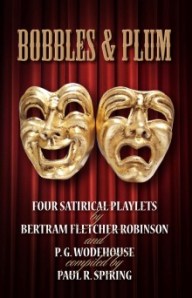
“The literary archaeologists at Madame Eulalie have unearthed yet another rare Wodehouse tidbit from the distant past – a set of four playlets of political satire in pantomime form, jointly credited to Sir Plum and one Bertram Fletcher Robinson. The first, “A Fiscal Pantomime – The Sleeping Beauty” was published in the London Daily Express on Christmas Day 1903; the next was “Our Christmas Pantomime – Little Red Riding Hood; or, The Virtuous British Public and the Smart Set Wolf” which appeared inVanity Fair on December 8, 1904; “A Winter’s Tale – King Arthur and His Court” from Vanity Fair, December 14, 1905, and finally “The Progressives Progress – Some memories of 1906” which appeared inThe World, January 1, 1907.

For the uninitiated, pantomime is an art form rooted in antiquity and it has a strong link to Commedia dell’arte; it evolved as an English entertainment in the eighteenth century. Performed at Christmas, pantomime was (and is) a form of theatre incorporating song, dance, slapstick, cross-dressing, in-jokes, topical references and audience participation. Pantomimes are usually based on traditional fairy tales but adapted for comic or satirical effect as other characters and situations arise. Traditions include the leading male juvenile character (principal boy) to be played by a young woman, usually in tight-fitting male garments that make her gender evident; An older woman (the dame) is usually played by a man in drag. The animal is played by an actor in animal costume, often a horse or cow played by two actors in a single costume. Audience participation includes calls of “He’s behind you!” or (“Look behind you!”), and “Oh, yes it is!” and “Oh, no it isn’t!” The audience boos the villain and “awwwwws” the poor “victim” as in nineteenth-century melodrama.

The Wodehouse-Robinson pantos parody the debate in Britain surrounding tariff reform and proposed changes to tax law. The heroes (conservative) and villains (liberal) are variously represented: Little Red Riding Hood is played by “The Virtuous British Public” while King Arthur is “(Prime Minister) A.J. Balfour;” The Unionist Party is personified by “Queen Guinevere” and in Sleeping Beauty, The Tariff Reform League is portrayed by the “A dragon.”

Although they weren’t intended for actual production, while reading these farces the reader can certainly imagine himself amidst a raucous London Christmas audience of a century ago, delighting at the buffoons and heroes, the slapstick, the wicked political satire, the ridiculous costumery. Pantomime music most often combines well-known songs with lyrics re-written for the occasion, which encourage audiences to sing along as well. (Pantomime is seldom performed in the United States, and Americans misunderstand the word “pantomime” to refer to the art of “mime.”)

Bertram Fletcher Robinson (whose name evokes the recollection of how PGW sold “Something New” to the Saturday Evening Post under the grand name Pelham Grenville Wodehouse) was eleven years PGW’s senior. A well-liked writer of articles, satirical playlets, short stories, lyrics, numerous articles, poems and books, Robinson is today known primarily for assisting his friend Arthur Conan Doyle with the plot of The Hound of the Baskervilles….”

Read the full article here.

Bobbles and Plum, a PG Wodehouse Playlets Book by Paul R Spiring is available from all good bookstores worldwide including in the USA AmazonBarnes and Noble and Classic Specialities, in the UK AmazonWaterstones and Book Depository (free delivery worldwide).
 

Tags: , , , ,

Love the way Charlotte is visiting the places in the book. I did the same with my two novels – Budapest, Havana, Alice Springs – great feeling to be where your characters are…. I did it before and wrote most of notes in those locations.

barefootonbakerstreet's avatarBarefoot on Baker Street

During a recent holiday to the South of France, I took a copy of Barefoot (second edition) along to the beautiful town of Narbonne which features at the start of chapter eleven.

Husband took a photo of me holding it beside the lovely canal de la Robine which I pictured quite accurately when I wrote about it – even though I’d never seen it before.

‘Narbonne was beautiful in the bright early-morning sunshine. The Canal de la Robine shone like a silver ribbon snaking through the centre of the town flecked by the little boats travelling its length towards the great Aude river.’

We also took this picture at Narbonne station, remembering how Red and Jude catch a train from here and travel to Paris where danger and adventure await them.  All that awaited husband and I that afternoon was a very nice lunch and an ice-cream!

View original post

 
Leave a comment

Posted by on September 29, 2012 in Uncategorized


Sherlock Holmes Society of London reviews: Anomalous – The Adventures of Sherlock Holmes

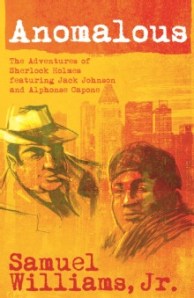
“Very few writers have tried to imagine what sort of things Holmes got up to, and what sort of people he met during his years living as the disaffected Irish-American, Altamont. He began his ‘pilgrimage’ in Chicago, so it’s natural that he would run into Diamond Jim Colosimo’s criminal organisation and encounter one of its youngest members, Al Capone. Natural too that he would visit the Café de Champion on West 31st Street, to meet its famous owner, Jack Johnson, the first black world heavyweight champion. The great boxer is actually the central character in a powerful novel, Anomalous: The Adventures of Sherlock Holmes featuring Jack Johnson and Alphonse Capone by Samuel Williams Jr (MX Publishing, £9.99/$16.95/€12.99). Johnson’s turbulent fortunes bring him to London, where two very different people, both black, have important rôles to play in a struggle to save both Johnson’s life and the security of the realm. You’ll recognise their names, I’m sure: Lucy Hebron and Steve Dixie…”

Anomalous – The Adventures of Sherlcok Holmes is available from bookstores including in the USA Barnes and Noble and Amazon, in the UK WaterstonesAmazon and Book Depository (free worldwide delivery) and in electronic formats – iTunes (iPad), KindleNook and Kobo.


Tags: ,

Philip K. Jones reviews Sherlock Holmes and the Dead Boer at Scotney Castle

“This is a first novel by an author new to Sherlockian fiction.  The presentation of Holmes and Watson is a bit different than is common in such works, but it does seem more sensible than others, both in the Canon and in the many pastiches available.  Holmes and Watson disagree and argue and look at the world quite differently than as we are accustomed to view them.  On the other hand, the world inhabited by this Holmes and Watson is quite different from that of the Canon and most pastiches.  It is a complex, gritty and more realistic world where things are seldom as they appear.

Early in the story as well as near the end, the author describes meals featuring a Turkish dish, Imam Bayildi, translated as “The Swooning Imam.”  In many ways, this dish is representative of the story as a whole.  Imam Bayildi is a main dish made with eggplant (aubergines) and a number of vegetables, herbs and spices.  In reality, the eggplant merely serves to provide neutral bulk and texture for the dish whose taste is compounded of the many flavors of the other ingredients.  In this story, the tale itself is complex and convoluted and not really believable, but it provides an excellent medium in which to present the gorgeous tapestry of places, characters, objects and opinions included by the author.

Holmes and Watson receive a peremptory summons to make presentations to a small society of wealthy Kipling fans.  In arriving early for the appointment, Holmes manages to scramble some of the plans for the event and this has consequences.  Plans are shifted and adjusted and complex events proceed with deviations.  A naked corpse is found in a pond on a neighboring estate and, from newspaper accounts Holmes decides that murder has been committed.  Watson objects and the dance begins.

The characters perform, the scenery changes and Holmes begins to realize his mistakes.  Dr. Watson comes to see that murder has been done and Holmes realizes the murder cannot be proven or prosecuted.  Clues contradict clues and the world shifts around as viewpoints change.  The author continues to present paradoxes and the characters act out their destined roles.  The modern world shifts its focus and Europe edges closer to the brink of war.

In addition to sharing my taste for complex prose and tangled events, the author also exhibits some talent in his fiction writing which does not appear in mine.  The only problems I could find were a very few anachronistic terms and a possibly over-active imagination.  Either the editor is quite capable or the author is most erudite or both contingencies apply.  A wide range of subjects are discussed and presented in complex language without becoming boring.  It was a real joy to read.”

Sherlock Holmes and the Dead Boer at Scotney Castle is available from all good bookstores including in the USA Barnes and Noble and Amazon, in the UK WaterstonesAmazon and Book Depository (free worldwide delivery) and in all electronic formats including Kindle and  iPad.


Tags: ,

Review of “Sherlock Holmes e i tesori di Londra” from Diario di Pensieri Persi, in Italian

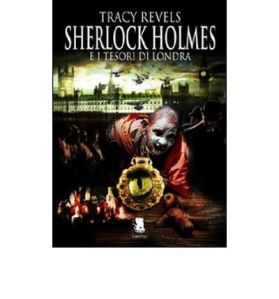
“Recensione ‘Sherlock Holmes e i tesori di Londra’ di Tracy Revels

Pubblicato da Stefania Auci

Cari lettori,

è stato pubblicato dalla Gargoyle Books un romanzo particolare, che ha tutti i numeri per diventare una perfetta lettura estiva, un mash up in cui trovano posto il voodoo, l’Inghilterra vittoriana, fate, fantasmi e una meravigliosa storia di amicizia. Protagonisti? Sherlock Holmes e John Watson. Questo volume, pubblicato in inglese con il titolo di Shadowfall, è stato seguito da un secondo, Shadowblood, pubblicato in Gran Bretagna a marzo 2012, dalle tinte più gotiche e dark e ambientata nel mondo della stregoneria. Personalmente, sono curiosa di leggere questo secondo volume poiché il primo mi ha intrigato e divertito, anche se ha lasciato delle perplessità che descriverò successivamente. 

Trama: 

Dove sono finiti i corvi della Corona, la Pietra di Londra, il Cuore di San Giorgio, ossia i principali tesori della capitale britannica di fine Ottocento? Esiste un collegamento tra questi furti e la raccapricciante serie di trafugamenti di cadaveri avvenuta nel Cimitero di Highgate, a cominciare dalla sparizione delle spoglie di una giovane americana creola? Alla Regina Vittoria e agli esponenti più importanti dell’establishment politico non resta che affidarsi a Sherlock Holmes. Ma se questa volta il celebre investigatore non fosse estraneo all’intricata vicenda? E se il suo metodo d’indagine, fondato sulla serrata applicazione della logica e sulla rigorosa osservazione, non bastasse a risolvere il caso?… “

Read the full article here.


Tags: , , ,

Philip K Jones reviews Sherlock Holmes and the Whitechapel Vampire by Dean P. Turnbloom

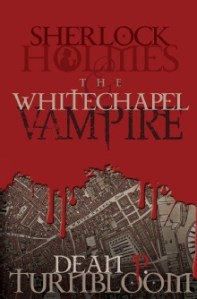
“This is a first novel by an author new to Sherlockian fiction who has undertaken to unite two of the most popular Sherlockian pastiche subjects into a single volume.  The Database of Sherlockian pastiches, parodies and related fiction lists ninety five efforts to have Sherlock uncover the identity of ‘Saucy Jack.’  Further, the database also lists fifty five efforts to tell of Sherlock’s efforts to cope with Vampires.  Two of the listed items combine these themes.  A short story, “The Children of the Night,” and the current volume are the only combinations of these themes, in so far as I know.

This book also combines two investigations.  Holmes is convinced that an Italian immigrant, accused of the murder of a young Italian lady on the ship that brought them from Italy, is innocent.  Holmes’ efforts to ‘clear up’ this case lead him into the investigation that Scotland Yard are bungling in front of all the world.  Prejudice, sloppy investigative techniques and an inability to look for a bloodthirsty murderer outside the lower classes have hamstrung the Yard’s investigation.

Holmes’ investigation is meticulous and revealing.  It is also unwelcome to ‘the powers that be.’  The cooperation he receives is spotty at best so the final resolution of the ‘Ripper killings’ is left clouded and uncertain.  Holmes solves his problems, has the Italian immigrant released and finds employment and new lives for him and his brother-in-arms.  The prostitute murderer disappears from history, we hope.

The book is reasonably well-written, with only minor editing errors.  The investigations are well covered and the characters are sharply drawn.  The book is not to my personal taste, but it is an interesting and well conducted effort.  The science aspects are imaginative and the settings are well done.”

Sherlock Holmes and The Whitechapel Vampire is available through all good bookstores including The Mysterious Bookshop in New York, Barnes and Noble and Amazon, and in all electronic formats including KindleNookKobo and iBooks (iPad).


Tags: , ,

dtbloom's avatarAmerican Abattoir

If you can filter out the British accent (pardon me, Steve), this is a delightfully illuminating talk with much that is of practical use…please enjoy and share with your friends…

View original post

 
Leave a comment

Posted by on August 21, 2012 in Uncategorized


Philip K Jones reviews Sherlock Holmes and the Irish Rebels

“This is Mr. McMullen’s second book of Sherlockian fiction and his gift for catching the reality of time and place is undiminished.  Since this book is about Irish History, it is a sad book.  It tells of the Easter Uprising of 1916 as experienced by Sherlock Holmes and Dr. Watson at the request of Mycroft Holmes.  The characters are mostly historic and are presented much as they were, flawed human beings trying to live up to their own ideals.

My knowledge of 20th Century Irish History is spotty at best, so I cannot speak to the accuracy of Mr. McMullen’s portrayals, but I suspect they are fairly true to life.  Many of the participants in this tale died during or within a short time after the events narrated.  Most of the prominent survivors died within the next few years, so our knowledge of these times relies mostly on the memories of a very few survivors and on those of friends of the participants.  Paper evidence, outside of court records, is in short supply and the courts were mostly English, with little regard for the truth of events in Ireland in the face of the urgency of The Great War.

The History between England and Ireland begins shortly after the Norman Conquest.  From the traditional English point of view, Ireland was a land of feuding tribes and pirate raiders.  The period of anarchy that followed the death of Brian Boru, who turned back the Vikings and their allies at the Battle of Clontarf, offered all the excuse that the Norman overlords needed to extend their conquest to the island.  Unlike England, the Irish were never integrated into the Kingdom.  They retained their own language, customs and religious leadership.

When Henry split the English Church from Rome, the Irish remained in communion with Rome.  The Church of Ireland made little impact on the Irish.  Most members were those whose loyalties were to England such as the descendants of Scottish and English emigrants brought into Ireland as part of Royal policies.  The Glorious Revolution of the Seventeenth Century completed the entire subjection of Ireland to English control as Cromwell invaded and devastated Ireland.  Revolution festered and generations of Irish patriots carried out an uprising roughly every forty years from the late Eighteenth Century into the Twentieth.

This story is typical of Irish tragedies.  Poets, teachers and madmen persuade and trick others into a hopeless revolution and the English act in their chosen character.  After the battle is won, they decide to wash out all traces of revolution with blood after being unable to mount any effective prevention.  Stupidity, venality and complete misunderstanding of the other side mark the normal course of English-Irish relations.

Obviously, this tale is fiction, but it could have been true.  Most of the characters are real and they acted much as described.  Holmes and Watson provide us with insights and a point of view of events that echo Greek Tragedies with their view that character is destiny.  As I said, this is a sad story, but it is gripping, emotionally involving and impressive.”

Sherlock Holmes and The Irish Rebels is available from all good bookstores worldwide including in the USA Amazon and Barnes and Noble, in the UK Amazon and Waterstones – and in all electronic formats including Amazon KindleNookKobo and Apple iBooks (iPad/iPhone).


Tags: , ,

Philip K Jones reviews Sherlock Holmes and the Lyme Regis Legacy

“This is another collection of tales by David Ruffle.  By my count it is his fourth collection, but I am not sure of the various publishing dates and editions involved.  This collection begins with a lengthy novella and includes a dozen or more, shorter items.  Those that are not fragments could be described as short stories.  Most have some Sherlockian content, but some have no relation to Holmes and Watson.

The title story is quite interesting and draws its villain from deep in Holmes’ past.  Mycroft and Inspector Lestrade put in appearances and Dr. Watson pursues his second (or is she his third?) wife.  Other old acquaintances make appearances, if only fleeting ones and Lyme Regis provides a colorful and interesting background

There is little to say about the shorter works.  All are interesting, some are touching and many are set in Lyme Regis.  The place and its history provide a fascinating background, especially to a writer as sensitive to its echoes as is Mr. Ruffle.

This is an interesting collection of stories, constructed around a colorful and interesting place.  It is well worth the time it takes to read and it evokes pictures of times long past and people worth knowing.  The collection ends with “A Brief History of Lyme Regis” and a pair of laudatory poems.”

Sherlock Holmes and The Lyme Regis Legacy is available from all good bookstores worldwide including in the USA AmazonClassic Specialities and Barnes and Noble  – and in all electronic formats including Amazon KindleNookKobo and Apple iBooks (iPad/iPhone)


Tags: , ,

Charlotte sums up a great Sherlock Holmes Week

barefootonbakerstreet's avatarBarefoot on Baker Street

On Saturday I was lucky enough to take part in the live Sherlock Holmes debate 3.  A group of Holmesian experts got together in London and via the internet to debate which was the best story in the original Sherlock Holmes canon.

I argued in favour of The Six Napoleons but faced passionate competition and things did get a bit heated – especially when we started discussing A Scandal in Bohemia.  I think ultimately, the winner of the debate was the canon as a whole because one story didn’t dominate – with such a brilliant and diverse body of work to choose from everyone has their own favourite.

After the initial debate ended, the audience were treated to a master-class in Sherlock Holmes’ method from mentalist Joe Riggs, described as The Real Sherlock Holmes.  Joe is such an interesting character and I recommend his new book – The Real Sherlock…

View original post 202 more words

 
Leave a comment

Posted by on August 7, 2012 in Uncategorized